Why distribution is the new moat for early-stage startups
Building is nearly free, so distribution is the new moat: reaching customers first is what protects you. Ben Leblois on what BADideas.fund believes, with 7 Bad Advice clips and polls.
Building a product is cheap now. What protects you from copycats is distribution: reaching the right customers before others do. Ben Leblois explains, with seven founders and operators who agree. Tell us if you disagree.
I'm Jurģis, community & brand lead at BADideas.fund and host of the Bad Advice podcast. Most issues dig into one go-to-market problem from the show and hand you a free tool to fix it. This one is different. There is no guest and no tool. It is what we believe, and you can argue with it.
The short version, for the people in a hurry. Most people think building a company got easier because tools are cheap. Starting did get easier. Winning got harder. When anyone can build your product in a weekend, building stops being the moat. Two things still set you apart: a strong belief that most people do not share yet, and distribution, meaning getting the product to the right people fast. That's why, now more than ever, distribution is the new moat. Below, Ben Leblois lays out the whole argument, each piece backed by a founder or operator who said the same thing on Bad Advice, and next to each one, a poll, because we'd rather hear where you disagree.
▶︎ Pitch us your idea and get funded
▶︎ Sign up for free monthly go-to-market news and resources
Last week I sat down with Ben, who helps shape what this fund stands for. Here is what he said, point by point.
It got easier to start, and harder to win
Ben starts with bad news. Everyone treats cheap tools as good news. He thinks that's exactly backwards for anyone trying to build something that lasts.
"Everyone thinks it got easier. Cheaper to build, cheaper to ship, no gatekeepers left, so it must be easier to make money, right? Maybe. At the margins. But to build something that lasts, that wins a market, that defines a category? That's harder now than it has ever been. And if you don't feel that in your gut, you're already on a path I can't join you on."
It's the same thing Madara Kņūtiņa told me on Bad Advice. The glossy startup story is a lie of omission, and the grind isn't a bug, it's the whole point: "Startups may look cool from the outside. They are gruesome on the inside, and that is the point, in the sense that it is that pain and overcoming challenges that drives satisfaction and drives the success and drives the team forward."
First: believe something most people don't yet
If building no longer sets you apart, Ben says only two things do. The first is what you believe that nobody else does yet.
"What do you believe that others laugh out of the room as too outlandish, too far in the future? Bolting a 1% twist onto the obvious wins you nothing. Push deeper. Find something you truly believe is worth doing. And for the love of god, don't outsource that insight to an LLM. We're all thinking with the same machine now. Ask it what to build and it hands you the median. The average is free, and worthless."
That's literally what we mean by bad ideas: not reckless, non-consensus. Roberts Bernāns lived the whole arc. Most investors rejected Nordigen before GoCardless bought it: "Most people said our idea was bad, and who in their right mind would make such a business? In our earlier speeches in front of investors, we were often at the bottom."
Everything else matters much less
Once you have the conviction, Ben is strict about focus. The two things that matter get almost all your time. Decks, logos and image get very little.
"Everything else, genuinely everything else, is secondary, by orders of magnitude. Find the thing you actually believe, the thing you have to do, and run at it with everything you've got."
Kristaps Krafte put the same discipline in founder terms: chase the business, not the theatre around it: "Entrepreneurs, focus on bringing in the cash. Focus on the cash flow. Don't focus on making the most perfect pitch deck, on being in the best relationships with the investor. Although that's important, really focus on your business."
The second thing that's left: distribution is the new moat
This is the main point. When the product can be copied in a weekend, the thing that decides who wins is who reaches the market first and best. Ben doesn't hedge it.
"Distribution. How fast can you move? Can your growth create a sense of inevitability, with customers, investors, partners, talent? In a world where someone can take you by storm overnight, you're running for your life every day."
Suhas Ghante agrees: "It's become so easy to start a company, to vibe code. So what sets you apart? Number one, storytelling. But number two, it's distribution... distribution, I would argue these days, is more important than product."
A finished product still needs customers to find it
The trap Ben keeps seeing is founders who mistake a finished product for a finished job.
"That's where most great companies quietly die. The product is right, the belief is right, and it never reaches the market fast enough to matter. In a world this noisy, that gap kills more good companies than bad ideas ever will."
Jēkabs Endziņš has been shouting this one for years: "I need to get a tattoo on my forehead: distribution-first mindset. Thanks to AI, building something is very easy. Right now the world is full of beautiful and unique products that no one knows about. Young founders should not think 'how do I build?' but 'how do I get noticed?'"
Speed matters more than before
Distribution isn't just reach. It's velocity. Ben's framing is that speed used to matter; now it's existential, because you're not outrunning ten competitors, you're outrunning a thousand.
"Speed has always mattered in startups. But outrunning a thousand people is a whole different sport from outrunning ten."
Egija Gailuma, who's raced the same clock building OX Drive, put it in one line: "We have to have speed. The one who will be the first to break through is still going to be the winner."
The generational companies are being built right now
Ben ends with timing. The biggest companies of each tech wave start early in it, and the AI wave is just starting. Small improvements on existing products come later. Which means the founders who run hardest now, with the hungriest teams, get the once-a-decade opening.
"We're at the very beginning of the AI cycle. The incremental companies aren't the ones being built right now. The amazing ones are. You need one thing you actually believe and the stubbornness to run at it harder than anyone alive."
Lauris Rutkis found the same thing building Swotzi. Hungry, committed founders can beat experienced ones: "Young people straight out of university with the right mindset would outwork the experienced ones. In early stage, when time is so valuable, outworking others is everything."
How BADideas.fund helps with distribution
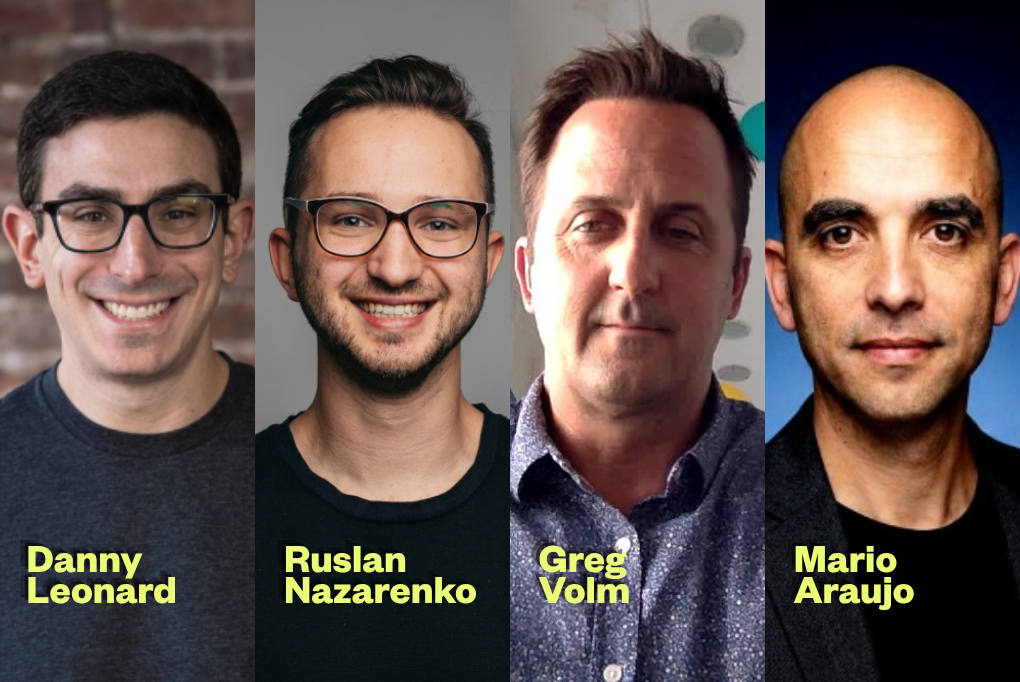
The judgment is the founder's half: the conviction, the read on the market, the thing you have to build. We can't manufacture that, and we don't try. It's why we back you. Distribution is the other scarce thing, and it's the half we go all-in on with you: a bench of go-to-market operators who are winning right now, matched to your motion, plus a system that helps you act on their advice, so expert help on distribution reaches you in days, not months. A few of the operators in the room with you:
Danny Leonard, SMB Outbound Sales
Top rep of 1,000+ at Groupon (2010 Salesperson of the Year); Square's first sales hire (architected a 200+ person, $5B GPV org); grew OrderAhead 1,300%+; co-founded Ramped (acquired by Teal); 7-year Sales EIR at 500 Startups; now Sales Operating Partner at Maschmeyer Group Ventures.
Ruslan Nazarenko, Marketplace & PLG Growth
Head of Growth at Scale AI; founding growth member at Vimeo (4x users, 3x revenue); growth at Bird ($2.5B, Sequoia-backed); took Braid 0→$1M monthly while cutting CAC from $200 to $40; top-5 Reforge contributor; now founder of Lumos AI and Labela.
Greg Volm, Enterprise Outbound Sales
20+ years across 8 venture/PE-backed companies; top AE at Salesforce, built Zendesk's first SMB→Enterprise teams through IPO; VP Sales NA at Xero, SVP Global Sales at Prezi (100M+ users), EVP Sales at Envoy; built the go-to-market team at Aircover.ai that sold the first enterprise AI deals to Fortune 500s; now VP Business Development at Harbor Compliance.
Mario Araujo, Product-Led Growth
Led company-wide PLG transformation at OutSystems ($10B+ platform), 0→multi-million self-service revenue in under 2 years, growth team 1→100+; 3x'd ARR at Softr in a year; built Penpot's monetization from zero; now Head of PLG at Flosum; advises Google, Mozilla, Boomi through ProductLed.
Frequently asked questions
It means that now that building a product is cheap and fast, the product itself is no longer scarce or defensible. Anyone can rebuild it. What's scarce is reaching the right customers first and building momentum competitors can't match. That reach and speed, distribution, is the new moat.
Work with BADideas.fund
We're an early-stage B2B fund across CEE and the Nordics, and everyone here has built companies before: the fund we wished we'd had. We back founders who work unreasonably hard. We focus on distribution: we catch sales and marketing problems early, while there is still time to fix them.
If you're building with a small team and betting on distribution, and want operators who have done your exact job before working with you:
▶︎ Pitch us your idea and get funded
▶︎ Sign up for free monthly go-to-market news and resources
Related questions
Send the deck. We read every one.
Yes or no in five business days, with the reason either way.