How to make a business plan for an early-stage startup (+ free pitch evaluator tool)
Nordigen co-founder Roberts Bernans spent a year on a startup he could have killed in an hour. His fix for how to make a business plan: validate fast, then pre-check your deck with our free Pitch Evaluator.
How to make a business plan before launch: test the idea fast, drop it fast if it fails, and let one real buyer tell you what a 40-page document cannot. From go-to-market operator and Nordigen co-founder Roberts Bernans.

I'm Jurģis, community & brand lead at BADideas.fund and host of the Bad Advice podcast. Each newsletter issue covers go-to-market problems from the show and gives you a free tool to work on them, such as an AI VP of Sales or Marketing.
The short version, for the people in a hurry. Making a business plan for an early-stage startup? Do not write the long document first. Before launch, your job is to find out if one real buyer wants the idea. Roberts Bernans, who co-founded Nordigen, scaled it across Europe and sold it to GoCardless, spent a full year building a startup he could have killed in an hour, because he validated late instead of early. The fix is a short loop: a couple of slides, one honest conversation with someone in the field, then kill or proceed. Write the plan after you have tested the idea. And before you pitch an investor, you can now see how we'd score your deck in minutes (free tool below).
▶︎ Pitch us your idea and get funded
▶︎ Sign up to your monthly dose of free go-to-market news & resources
▶︎ Access the tool of the week
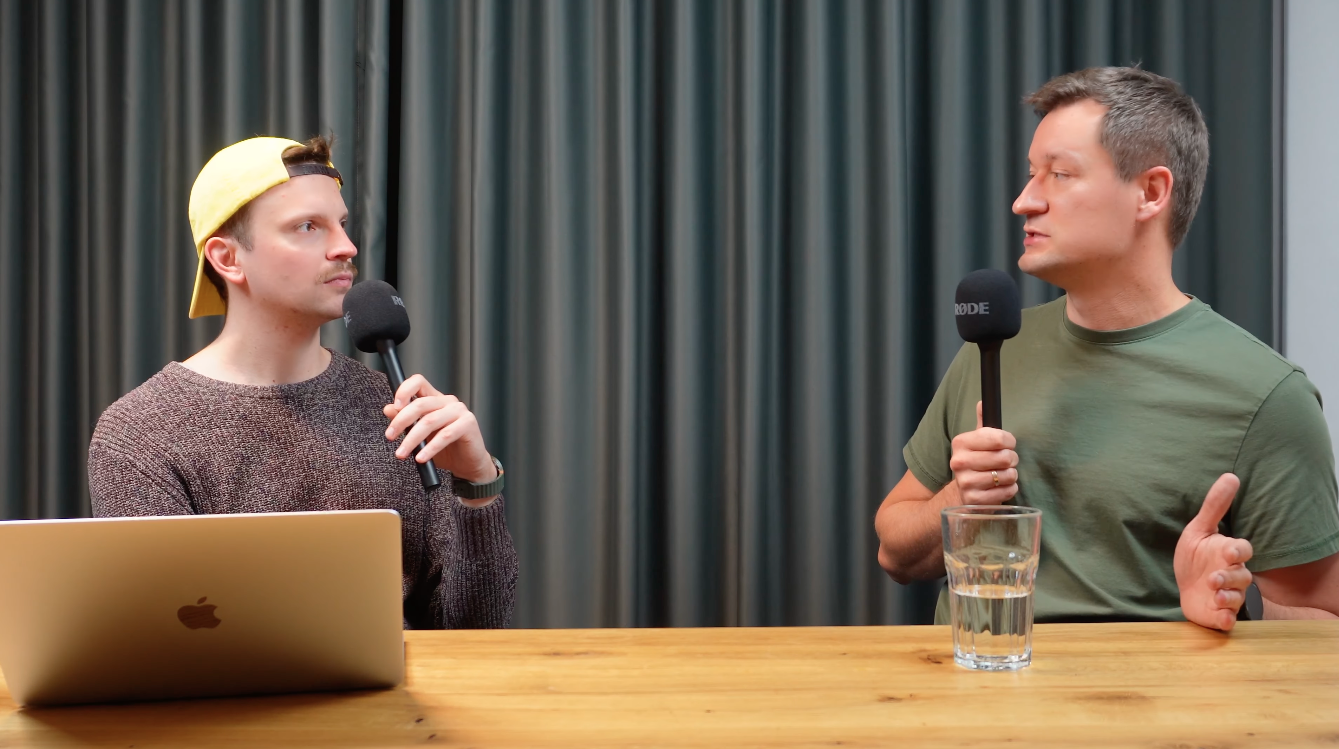
I sat down with Roberts for an hour on our podcast, Bad Advice. Here is what stuck.
The year-long business plan that should have been a one-hour kill
Before Nordigen, Roberts and his co-founder Rolands (who's now working on BirdyChat) had an idea: a marketplace where travellers could resell airline tickets they weren't going to use. The market logic looked fine: around 5% of people don't show up for their flights. So they did what founders are told to do. They built the business cards, the presentations, "all sorts of nonsense you don't need," and worked the idea for a year.
"We worked for a year on this idea, and we should have taken an hour to kill it"
The thing that finally killed it was a single conversation: they needed an airline as a launch partner, got in front of the AirBaltic board, and heard a flat no. A year of planning, one meeting to end it. Roberts' lesson: the plan did not protect them. The one meeting with a buyer, which they put off for a year, was what mattered.
Make your business plan a short test you repeat
A business plan for an early-stage startup isn't a document you write once and defend. It's a fast loop you run dozens of times until something sticks. When Roberts and Rolands reset after the airline flop, they built a weekly ritual: meet for a beer, each bring a list of ideas, pick one or two, and spend a week trying to validate them.
"Get a product as early as possible in front of your users, because only a user can tell you if it's good or bad"
The validation itself was deliberately cheap. No build. Maybe a couple of slides to illustrate the point.
"Don't build anything. Maybe build a couple of slides just to illustrate the point. Get it in front of a couple of people, validate, kill or proceed. Very simple."
They ran 100 ideas through that filter. Idea number 100-ish was Nordigen. That is what an early-stage business plan really is: what is left after you quickly drop a hundred ideas.
Stop chasing statistical significance. One person is often enough.
The most common mistake Roberts sees in younger founders is over-engineering the validation step, the exact thing that makes a "proper" business plan feel productive while teaching you nothing.
"Young entrepreneurs over-engineer. Let's create a Google Form with 100 questions, build it out for weeks. Then how do I find 100 people to get a statistically significant response? Sometimes it's enough with one person to tell you."
The goal is to remove doubt as fast and cheaply as you can. One credible buyer who says "I'd never pay for this" has just saved you a year. He calls the mindset the cockroach: relentless, hard to kill, willing to ask.
"It doesn't cost you anything to invite someone on LinkedIn and say, 'Hey, I'm building a startup. Can I grab you for a coffee chat?' Most will say no. Fine. Didn't cost you anything. But some will reply."
Whose advice belongs in the plan, and whose doesn't
A business plan absorbs advice from everywhere: accelerators, hackathons, investors, that one angel with strong opinions. Roberts first looks at who is giving the advice, then at the advice. Early on, most people told him his idea was bad and Nordigen ranked at the bottom of pitch competitions. Following all of it would have been fatal.
"Most people who gave us advice had good intentions. It's just that their experience was either incomplete or too specific to be useful in our case."
His practical move: instead of asking an advisor "tell me about you," ask "tell me what you're great at," then take everything in context. The plan is yours to own: advisors inform it, they don't write it.
The AI mistake that wrecks a plan before it starts
Roberts now leads BADbrain, the AI infrastructure behind BADideas, effectively an AI interface to the fund that connects our 300+ operator and founder members to the help they need.
"People start from the end. They go for the flashy things, autonomous agents, and don't realise nothing's working. You can't expect agents to do magic if you don't have any data, or it's structured the wrong way. The agent isn't working badly. What you're expecting from it is unfounded."
The plan-level takeaway: AI and automation are means to an end, not the strategy. "Every tool should have a purpose." Don't write "AI-powered" into your plan before you've written down what data you actually have.
The BADideas.fund pitch evaluator
Roberts' whole philosophy is that the best validation is one honest read from someone who actually decides. The trouble is that those people, investors, are exactly who you can't easily get a coffee with before you're ready. So we built the next best thing, and the same validate-fast logic runs underneath it.
Roberts matched a year of our real investment committee decisions, the scores and the written comments, against the pitch decks behind them. He worked out how BADideas.fund decides from a deck, and turned that into a small tool: upload your pitch deck and get a glance at how BADideas would evaluate your business.
The feedback follows how we score, so it is specific. It shows how an early-stage B2B investor reads your business. Use it to find the holes before the real conversation.
Watch / listen to the full episode
Roberts talks more about building Nordigen, the lucky acquisition, hiring fast (and firing fast), and why he calls himself productively lazy.
▶︎ Watch on YouTube ▶︎ Listen on Spotify
Frequently asked questions
At the earliest stage, treat the business plan as a fast validation loop rather than a long document. Define the idea in a couple of slides, get it in front of one real potential buyer who can tell you it's good or bad, and then kill it or proceed. Run that loop across many ideas. The written plan is the output of validation, not the thing you write before validating.
Work with BADideas.fund
We're an early-stage B2B fund across CEE and the Nordics, and everyone here has built companies before. We back founders who work unreasonably hard, and help them catch sales and marketing problems early, while there is still time to fix them.
If you are raising and want operators who have done your exact job before:
▶︎ Pitch us your idea and get funded
▶︎ Sign up to your monthly dose of free go-to-market news & resources
▶︎ Access the tool of the week
Related questions
Send the deck. We read every one.
Yes or no in five business days, with the reason either way.